collecting
The collection is the notes, not just the shelf.
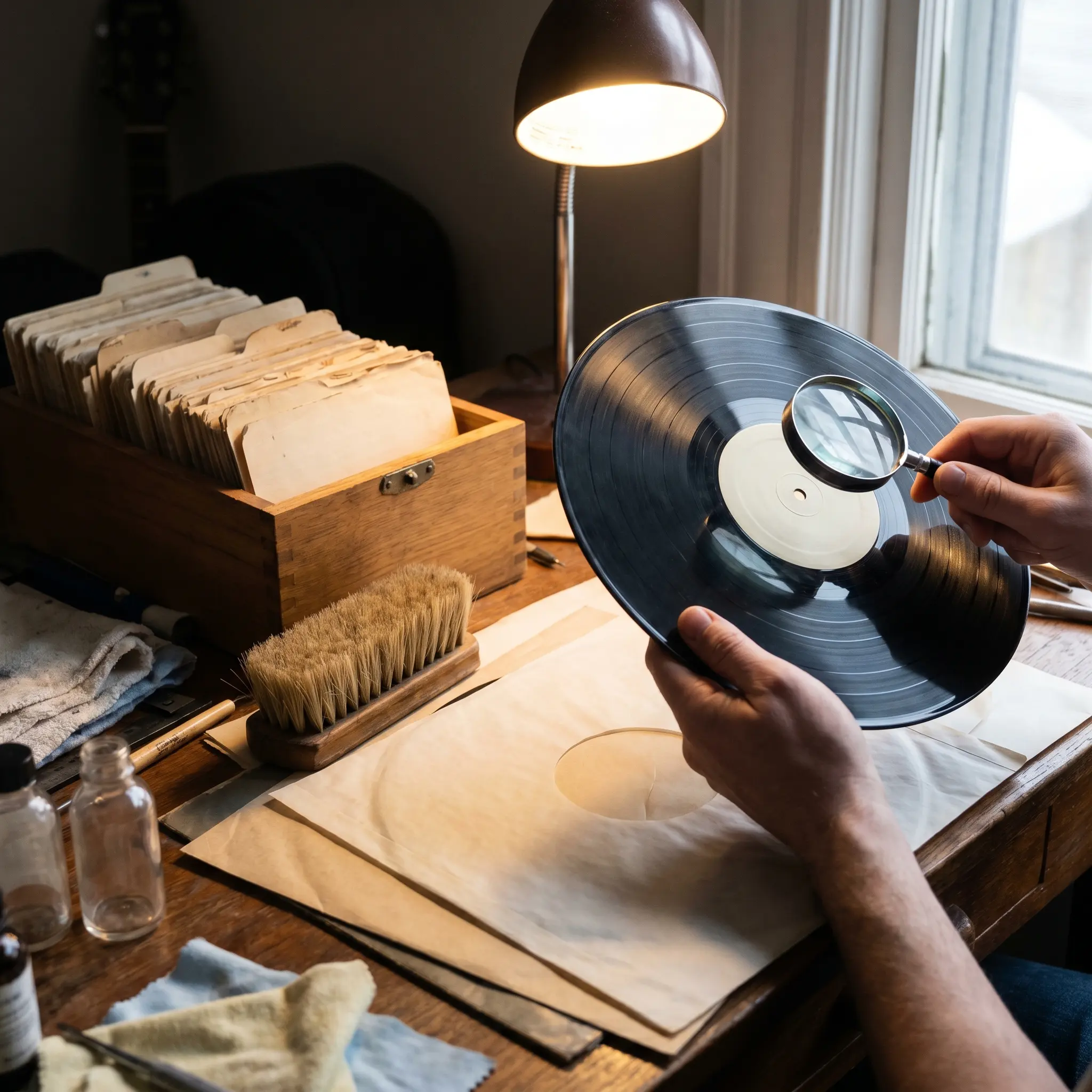
A useful music collection has memory. It remembers which copy was cleaned, which pressing sounded brighter on one system, which sleeve was replaced, and which disc should not be loaned without a warning. Rawdisc encourages collectors to build a small ledger for each object instead of relying on marketplace blurbs or scattered forum lore.
Object
Format, country, label, matrix or hub mark, visible variant, sleeve type.
Condition
Media surface, spindle marks, edge warps, disc rot signs, sleeve abrasion, odor, moisture risk.
Listening
Setup, cleaning status, playback level, comparison copy, first strong impression, fatigue notes.
Care
Sleeve replacement, cleaning action, storage position, future check date, handling caution.
A lawful collection can still be deeply researched.
The most interesting work often happens without any unauthorized files at all: comparing two legal copies, reading matrix marks, checking restoration credits, confirming whether a remaster changes track spacing, and noticing how storage affected playback. Collecting becomes more durable when the note can outlive the excitement of acquisition.