Evidence before ranking
Rawdisc avoids universal best-pressing claims. A useful note explains the copy, source clues, playback setup, and comparison point so another listener can understand the context.
method
Rawdisc was built for readers who want to keep physical media useful without turning collecting into speculation or audio into superstition. The site treats every disc as an object with a history: a mastering decision, a manufacturing run, a sleeve choice, a storage environment, a playback chain, and a listener who may be hearing it years after release.
Our method is simple. Start with the legal copy in hand. Inspect condition before judging sound. Note the playback chain before making claims. Separate mastering differences from setup differences. Keep transfer and preservation practices within personal, lawful use. When a claim cannot be checked, label it as an impression rather than a fact.
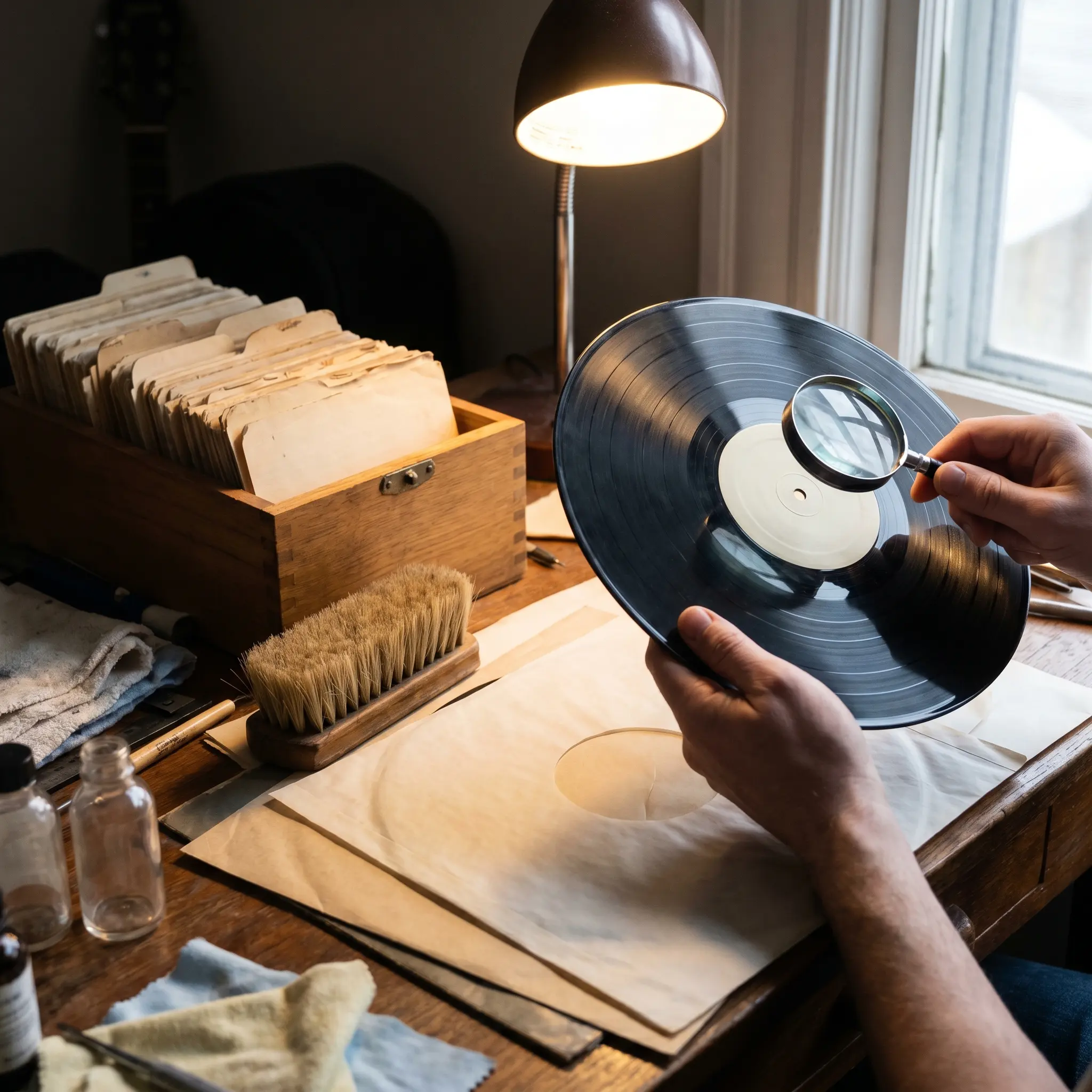
Rawdisc avoids universal best-pressing claims. A useful note explains the copy, source clues, playback setup, and comparison point so another listener can understand the context.
Private reference transfers, catalog notes, and care routines are discussed as access and study tools. Unauthorized distribution and illegal download paths are outside the editorial boundary.
Instead of vague superlatives, notes describe level, image, vocal placement, bass shape, surface noise, fatigue, and whether a change appears across more than one system.